
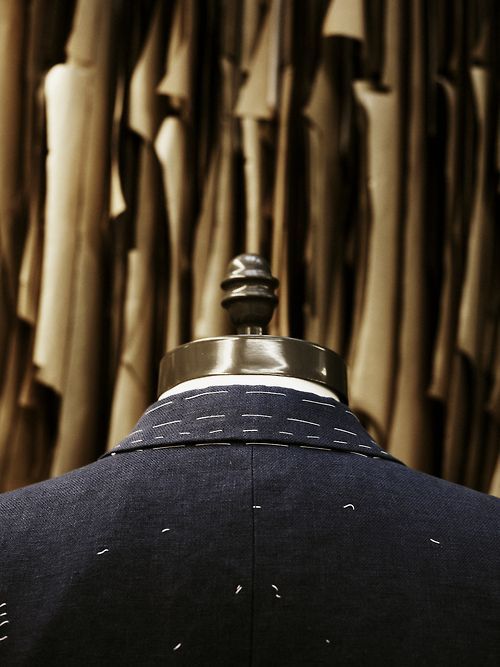
Savile Row has long served as the benchmark for what a suit can be when it’s treated as craft rather than commodity. Tucked into London’s Mayfair, the street itself is unassuming—but its influence is anything but. What began as a practical solution for military officers—garments built for durability, movement, and exact fit—gradually evolved into a civilian standard rooted in precision. Over time, that philosophy shaped the modern suit: structured but not rigid, refined without excess, and always built with intention.
At the center of this tradition is Bespoke tailoring, a term that has been diluted over time but remains exact in its original meaning. A bespoke garment is not selected—it is commissioned. The process begins with cloth chosen specifically for the client, followed by a pattern drafted entirely from scratch. From there, the suit moves through multiple fittings, each one refining balance, proportion, and movement. This is not customization layered onto a template; it is construction guided by the individual. The result is a garment that doesn’t just fit—it aligns.
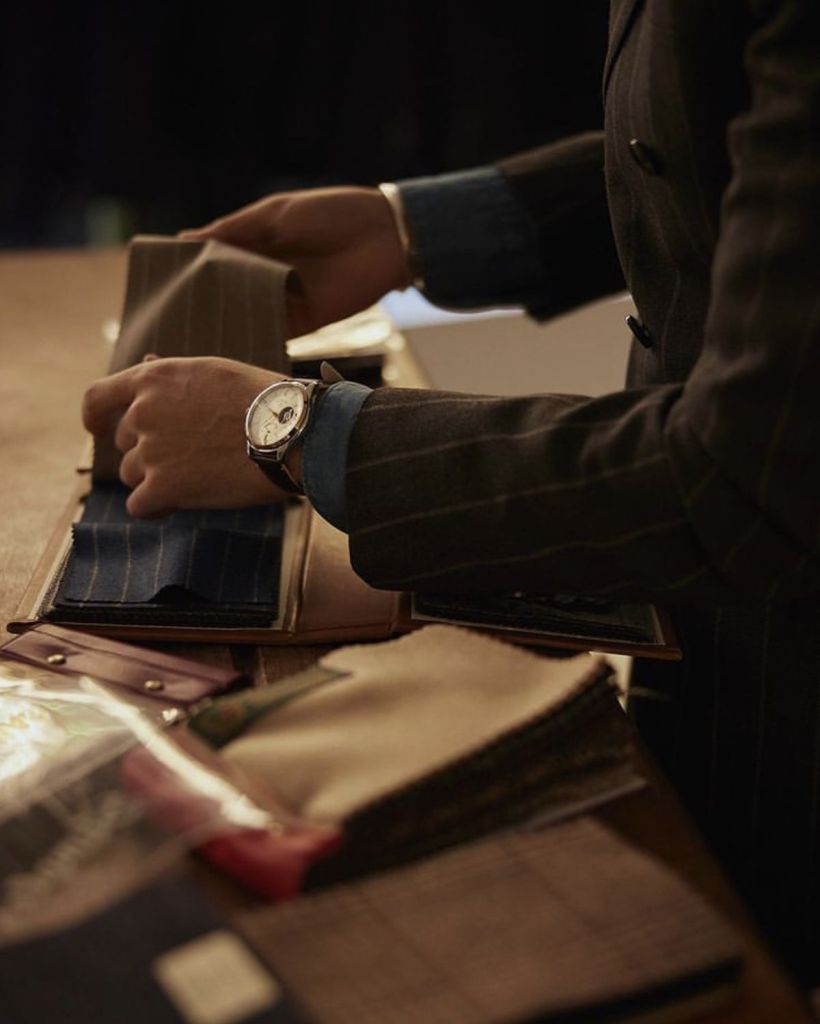
The houses that built Savile Row’s reputation—such as Henry Poole & Co., Huntsman, Gieves & Hawkes, and Anderson & Sheppard—each developed their own interpretation of that standard. Some favored a more structured, military-inspired silhouette, while others introduced a softer drape that followed the natural lines of the body. Despite these differences, the underlying principle remained consistent: craftsmanship over convenience. Every stitch, every cut, every adjustment served a purpose.
Technically, what separates a true bespoke suit from everything else is its method of construction. A floating canvas—hand-shaped and stitched between layers of cloth—allows the jacket to mold to the wearer over time. Seams are set and reset by hand. Patterns are archived and refined with each commission, meaning the relationship between tailor and client deepens with every garment. This is why bespoke is often described not as a purchase, but as a process—one that unfolds gradually and improves with repetition.
In the modern landscape, tailoring exists across a wide spectrum. Off-the-rack offers immediacy. Made-to-measure provides a level of adjustment. But bespoke remains distinct because it refuses efficiency in favor of accuracy. While technology has introduced speed and scalability to much of the industry, Savile Row has remained deliberately resistant. The timelines are longer. The output is smaller. And that restraint is precisely what preserves its relevance.
Ultimately, the significance of Savile Row extends beyond clothing. It represents a way of thinking—one that values discipline, patience, and a commitment to getting things right. A well-made suit does not rely on logos or trends to justify itself. It communicates through proportion, balance, and quiet confidence.
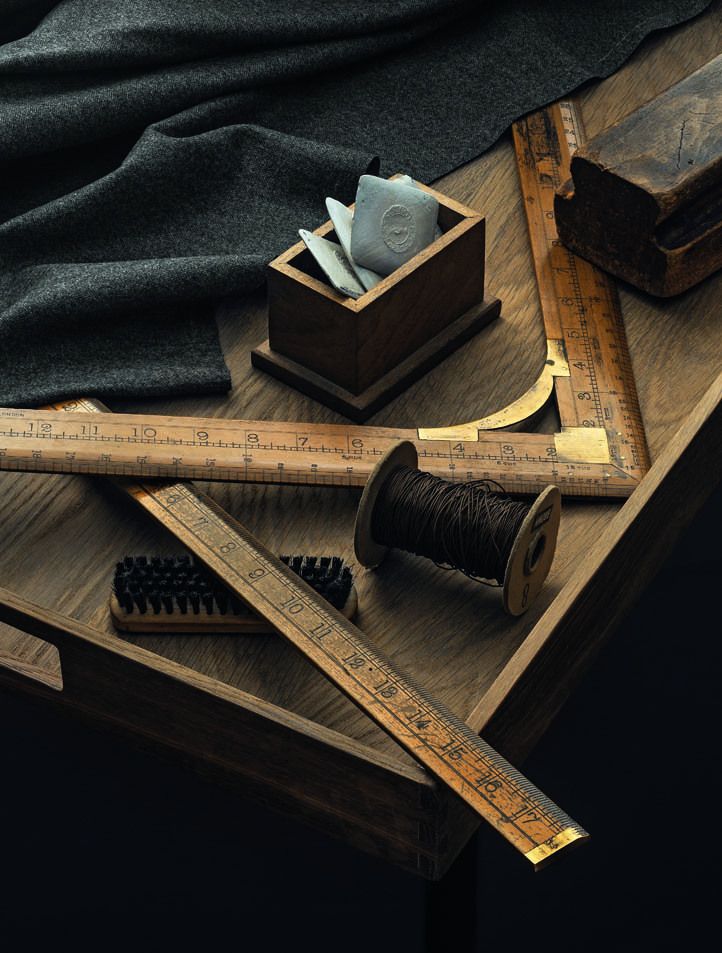
Standards like this are not created quickly, and they are not easily replicated. They are built over time, refined through generations, and upheld by those unwilling to compromise. That is why Savile Row still matters—not as a relic of the past, but as a reminder of what intention looks like when it’s carried through to the end.

Leave a comment